
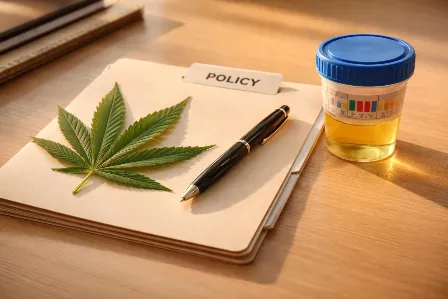
What Georgia Employers Need to Know About Marijuana
What Georgia Employers Need to Know About Marijuana
Learn what Georgia employers need to know about marijuana, workplace testing, and policy
If you hire in Georgia, marijuana is one of those topics that sounds simple until it isn’t.
A manager hears that marijuana is “medical now.” An applicant says CBD is legal, so a positive THC test should not matter. A supervisor wants to know whether a failed test proves impairment. A transportation company has CDL drivers and knows federal rules are stricter, but the details get fuzzy fast.
The short version is this: Georgia employers still have broad room to prohibit marijuana use, test for it, and act on positive results. But the details matter. Your policy matters. Your testing process matters. And if you handle safety-sensitive roles, court disputes, or DOT regulated testing, the stakes go up quickly.
Here’s what Georgia employers need to know.
Georgia law is still restrictive on marijuana
Georgia has not legalized recreational marijuana. Under state law, marijuana remains illegal for general use and possession.
Georgia does have a limited medical cannabis system. Certain registered patients may lawfully possess low-THC cannabis oil under state rules. That sounds like a huge change, but for employers it usually changes less than people assume.
A few points matter most:
Recreational marijuana is still illegal in Georgia.
Georgia’s medical cannabis law is limited. It does not create a broad right to use marijuana at work.
Smoking marijuana remains illegal under Georgia’s medical framework.
Some local governments have reduced local penalties for small amounts, but local decriminalization is not statewide legalization.
That last point trips people up. If a city reduces penalties, an employee may hear “it’s basically legal now.” It isn’t. For employment purposes, Georgia employers should not treat local decriminalization as a reason to relax workplace rules unless legal counsel tells them otherwise.
A medical cannabis card usually does not block employer action
This is where many workplace disputes start.
In Georgia, a registry card for low-THC cannabis oil does not generally force a private employer to allow marijuana use, possession, or impairment at work. It also does not erase a positive THC result.
That is partly because marijuana remains illegal under federal law. It is also because Georgia law does not give private employees the kind of broad employment protections that exist in some other states.
So if an employee says, “I have a medical card,” the practical question is not whether the employee can use marijuana generally. The question is whether your policy permits the conduct and whether the role has safety, regulatory, or performance concerns.
For many employers, especially those with safety-sensitive duties, the answer is still no.
Georgia employers can usually keep a drug free workplace
Georgia employers generally may adopt and enforce a drug free workplace policy. That can include rules against:
using marijuana on the job
reporting to work under the influence
possessing marijuana at work or on company property
testing positive for THC under stated policy conditions
Because Georgia is an at-will employment state, employers often have substantial discretion, as long as they apply policies consistently and do not violate other laws or contracts.
Still, “we can do this” is not the same as “we should do it casually.” A sloppy policy creates avoidable problems. A vague policy creates arguments. Inconsistent enforcement creates the biggest mess of all.
If you want your policy to hold up in the real world, it should clearly address marijuana, cannabis, THC products, hemp-derived products, and CBD.
CBD and hemp are a real headache for employers
I wish this part were simpler.
Employees often assume CBD is harmless because hemp products are widely sold. But legal availability does not guarantee a workplace-safe outcome. Some CBD and hemp products contain enough THC, or are mislabeled enough, to produce a positive drug testing result.
That puts employers in a difficult spot. The employee may insist they never used “marijuana.” The lab result may still show THC metabolites.
A clear policy helps here. Many employers say, in plain English, that employees are responsible for what they ingest and that use of CBD, delta products, or hemp-derived products is not an excuse for a positive THC result. Whether that is the right choice for your organization depends on your risk tolerance and workforce, but ambiguity usually causes more trouble than clarity.
A positive marijuana test is not the same thing as proof of impairment
This is the point I wish more supervisors understood.
Most workplace marijuana tests do not tell you whether someone is impaired at the moment you test them. They usually tell you that THC or its metabolites are present in the body over a detection window.
That matters because employers sometimes jump from “positive” to “was high at work.” Those are not always the same thing.
Here’s the practical distinction:
Urine drug testing
Urine drug testing is common for pre-employment testing and many workplace programs. It is well established, widely accepted, and often cost-effective. But it usually detects prior use, not current impairment.
Hair follicle testing
Hair follicle testing can show a longer pattern of use. Employers sometimes prefer it for certain hiring or monitoring situations. But it is not a tool for proving very recent impairment.
Oral fluid testing
Oral fluid testing may better reflect more recent use than urine or hair in some situations. Employers sometimes consider it for post-incident or reasonable suspicion cases, depending on applicable rules and operational needs.
Breath alcohol testing
Breath alcohol testing is different. Alcohol and marijuana are not measured the same way. A breath alcohol test can give a clearer picture of recent alcohol use. Marijuana testing does not work that cleanly.
So what should employers do? If you are dealing with suspected impairment, do not rely only on a lab result. Document observed behavior. Train supervisors on reasonable suspicion. Note speech, coordination, odor, unsafe acts, confusion, and other job-related observations. If discipline is challenged later, that documentation matters.
Testing policies need to match the job and the risk
A marijuana policy should not be copied from a random template and forgotten in a handbook.
Different employers need different testing triggers. Common options include:
pre-employment testing
random testing for designated roles
reasonable suspicion testing
post-accident testing
return-to-duty testing
follow-up testing
For employers with office-based roles, the risk calculation may look one way. For employers with drivers, machine operators, warehouse teams, healthcare staff, or people who enter homes or job sites, it looks very different.
Some employers also need mobile testing or remote workforce testing because employees are spread across counties or work in the field. In those cases, logistics matter almost as much as policy language. If collections are delayed, chain of custody gets sloppy, or supervisors improvise, a manageable issue can turn into a legal one.
DOT regulated testing is stricter, and there is not much room for debate
If you employ CDL drivers or other DOT-covered workers, federal law controls the testing rules.
This is one of the clearest parts of the whole subject: under DOT regulated testing rules, marijuana remains prohibited for safety-sensitive employees, even if a worker has a state medical cannabis card.
That means a driver cannot point to state law as a defense to a positive DOT marijuana test. The Medical Review Officer does not verify marijuana use as a lawful medication under federal DOT rules the way some other medications may be reviewed.
If a covered employee tests positive, the employer must follow DOT procedures. For many roles, that means immediate removal from safety-sensitive duties and the return-to-duty process before the employee can perform those duties again.
For commercial transportation companies, this is not an area for homemade procedures. The federal rules are detailed. Recordkeeping matters. Timing matters. Collections must follow chain of custody requirements. Many employers use TPA services or consortium management to keep the process organized, especially when they have multiple drivers, owner-operators, or scattered reporting locations.
DOT physical exams are a separate requirement, but employers often think about them alongside drug testing because both affect driver qualification and scheduling.
Use defensible testing practices, not shortcuts
If marijuana testing could affect hiring, discipline, termination, workers’ compensation disputes, unemployment hearings, or litigation, defensibility matters.
That usually means:
laboratory-confirmed results, not just a quick screening device
documented chain of custody
qualified review of non-negative results
consistent written procedures
secure reporting and confidentiality
For many employers, SAMHSA-certified labs are part of that defensible process. If results may end up in a contested matter, court-admissible results are much easier to defend when the collection, handling, and reporting process is tight from the start.
This is one of those boring operational details that saves real money later.
Georgia’s certified drug free workplace program is worth a look
If your company wants a more formal structure, Georgia’s certified drug free workplace framework can be useful.
A true DFWP is more than occasional testing. It usually includes written policy language, notice to employees and applicants, supervisor training, employee education, testing procedures, and documentation standards. Employers often look at these programs because they want consistency and a stronger compliance posture, not just because of insurance or administrative reasons.
Even if you do not pursue formal certification, the model is a good one. It forces employers to answer questions they tend to avoid:
Who gets tested, and when?
What substances are covered?
What happens after a positive result?
Is there a chance for rehabilitation or last-chance agreements?
How do we handle refusals to test?
What documentation do supervisors need?
If your answer to those questions is “we’ll figure it out when it happens,” you are not really running a policy. You are gambling.
What employers get wrong most often
I see the same mistakes over and over.
They use vague policy language
If your policy says “illegal drugs” but does not mention marijuana, THC, cannabis oil, CBD, hemp-derived products, or testing consequences, expect arguments.
They treat every positive result as current intoxication
That is not what most tests prove. A positive result may support discipline under policy. It does not automatically prove on-the-job impairment.
They fail to train supervisors
Reasonable suspicion decisions should never come down to “my manager had a bad feeling.” Supervisors need real training on signs, documentation, timing, and what to do next.
They ignore consistency
If one worker is terminated for a positive marijuana test and another is not, with no documented reason for the difference, you have created a problem. Maybe a legal one.
They rely on non-defensible collections
If the result could be challenged, use proper chain of custody from the start. Shortcuts look cheap until you need to defend them.
A practical marijuana policy checklist for Georgia employers
If your current policy has not been reviewed in a while, here is a good reset point.
1. Define the substances clearly
Spell out that the policy covers marijuana, cannabis, THC, low-THC cannabis oil, CBD products, hemp-derived cannabinoids, and similar products when they lead to prohibited conduct or positive tests.
2. Separate use, possession, impairment, and test results
These are related but not identical issues. Your policy should say what is banned and what evidence supports each category.
3. List the testing circumstances
State when pre-employment testing, random testing, reasonable suspicion testing, post-accident testing, and return-to-duty testing apply.
4. Match the testing method to the purpose
Urine drug testing, hair follicle testing, oral fluid testing, and breath alcohol testing each answer slightly different questions.
5. Address DOT-covered roles separately
DOT regulated testing has its own rules. Do not mix federal and non-federal procedures in the same muddy paragraph.
6. Build in documentation and chain of custody
If a result may need to stand up in court or an agency hearing, you want court-admissible results and a clean collection trail.
7. Train supervisors
A policy on paper is not enough. Managers need to know how to apply it without improvising.
8. Review multi-state issues
If you employ people outside Georgia, a single national marijuana policy may not work. Some states give medical or recreational users more employment protection than Georgia does.
The bottom line
For Georgia employers, marijuana is still mostly a policy and compliance issue, not a permissions issue.
Recreational marijuana is not legal in Georgia. The state’s limited medical cannabis system does not usually require employers to permit use or excuse a positive THC result. Employers generally can maintain a drug free workplace, use pre-employment testing and other forms of drug testing, and enforce written rules, especially in safety-sensitive jobs.
But the smart move is not to overreact or underreact.
Do not assume every positive test proves impairment. Do not assume a medical card changes everything. Do not assume CBD is risk-free. And if you have CDL drivers or other federally regulated workers, remember that DOT rules are stricter than state-level conversations.
A good marijuana policy is clear, specific, and defensible. A bad one is vague until the day you need it. That day usually arrives sooner than people expect.