
How Court-Ordered Drug Tests Work - A Guide for Attorneys and Their Clients
If you have never dealt with a court-ordered drug test collection before, the whole thing can feel bigger and scarier than it needs to be. That reaction is normal. People hear “drug test” and think of a quick cup test at a job site or a random screen at probation. Court-ordered testing is different. The paperwork matters more. The timing matters more. The way the sample is collected, sealed, tracked, and reported matters a lot more.
For attorneys, that difference is the whole point. In family law, criminal cases, probation and parole testing, and drug court programs, the court usually does not want a casual result. It wants a result that can hold up if someone challenges it. For individual citizens, the main takeaway is simple: follow the order exactly, understand what kind of test you are being asked to take, and do not assume all testing works the same way.
What “court-ordered” drug testing collection really means
A court-ordered drug test collection is testing required by a judge, probation officer acting under court authority, or a court program. It may come up in a few common situations:
child custody testing or visitation disputes
bond conditions in a criminal case
probation and parole testing
juvenile matters
diversion or accountability court matters, including drug court programs
cases where sobriety is tied to compliance with a treatment plan
Sometimes the order is entered after one party asks for it. Sometimes it is built into a probation sentence or a bond condition. Sometimes it is part of a standing program requirement and the person being tested already knows random testing is part of the deal.
The exact terms can vary a lot. One order may require a single test by a certain date. Another may require random testing for months. Another may specify a type of specimen, such as urine drug testing collection or hair follicle testing. Another may say who receives the report, such as the court, counsel, probation, or all parties.
That is where people get into trouble. They assume the order is vague, or flexible, or close enough. Usually it is not. If the order says test within 24 hours, that deadline matters. If it says use a chain of custody collection, an instant retail test is probably not good enough.
Why courts order testing in the first place
Courts order drug testing collection to answer a practical question. Is this person using drugs or alcohol in a way that affects safety, compliance, parenting, treatment, or public trust?
In a child custody case, the question may be whether a parent has recent drug use, a longer pattern of use, or compliance with a sobriety agreement. In a criminal case, the issue may be whether a person is following bond conditions or whether substance use is tied to the alleged offense. In probation or parole, the court may be monitoring ongoing compliance. In a treatment court, testing is usually part of accountability, not just punishment.
That distinction matters. A judge is not ordering testing out of curiosity. The test is being used as evidence, supervision, or both.
People also assume every positive result means the same thing. It does not. A positive test in a pre-employment testing setting is handled differently than a positive in a custody dispute. A positive in a workplace case is different from a positive in DOT regulated testing. The rules, the reporting path, and the legal consequences are not interchangeable.
The basic process, from court order to final report
Most court-ordered drug testing collection follows a fairly predictable path.
1. The order is entered
The first step is the order itself. Read it carefully. Look for:
the deadline
the type of test required
whether testing is one-time or random
who pays
where the person must report
who gets the results
whether missed tests count as refusals or positives
If you are a lawyer, this is where the case can get messy fast. If the order is unclear, fix that before the testing date comes and goes.
2. The donor reports for collection
The person being tested, usually called the donor, appears at the collection site with identification. Depending on the order or program, the test may be scheduled or random. In random testing programs, the donor may be required to call a hotline, check a portal, or respond to same-day notice.
Showing up late is not a small detail. Courts and supervision programs often treat missed or delayed reporting as noncompliance.
3. Identity and paperwork are verified
The collector checks identity and starts the paperwork. This is where chain of custody begins in a real sense. The donor, collector, and sometimes the receiving lab all become part of a documented trail showing who handled the specimen and when.
That trail is one reason court-admissible results carry more weight than a simple instant test with no formal documentation.
4. The specimen is collected under controlled procedures
The type of specimen depends on the order. Courts may use urine drug testing collection, hair follicle testing, oral fluid testing, or breath alcohol testing. Each has a different purpose, and I will get to that in a minute.
The collection process may include steps to reduce tampering, such as checking temperature on a urine sample, securing personal items, or requiring direct observation when the rules allow it. Observed collections are not automatic in every case, but they are more common when tampering is a concern.
5. The sample is sealed and sent to a lab
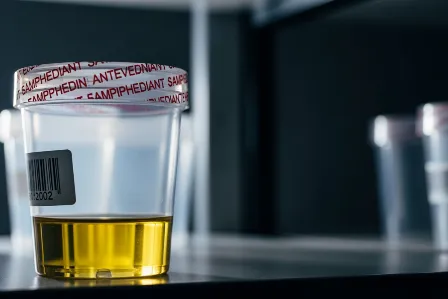
Once collected, the sample is sealed with tamper-evident materials and documented. Then it is shipped to a lab for testing. For legal matters, attorneys often prefer samples processed by SAMHSA-certified labs because those labs follow established federal quality standards for workplace testing. That does not mean every court order is governed by federal workplace rules, but it does mean the lab process is easier to defend when questions come up.
6. Screening and confirmation take place
Many samples go through an initial screen first. If the screen is non-negative, the lab usually performs a confirmation test using more specific scientific methods. This is the part many people miss. A proper legal test is usually not just “the cup said positive.”
Confirmation testing matters because it reduces false positives and identifies the drug or metabolite more specifically.
7. Results are reported to the authorized party
The final result is sent only to the parties authorized by the order or program. That may be the court, probation, counsel, a guardian ad litem, or another designated official. In some settings, a medical review officer may be involved, especially when there is a possible legitimate prescription explanation.
Why chain of custody matters so much
If you remember one phrase from this topic, make it chain of custody.
Chain of custody is the documented history of the specimen from collection through reporting. It answers the questions a court will care about later:
Was this sample really collected from the right person?
Was it sealed properly?
Who handled it?
Was it altered, mixed up, or left unsecured?
Was the final result tied to the same sample collected that day?
Without that documentation, a result is easier to challenge. That is why a quick over-the-counter test or a casual office test often does not carry the same weight as a formal legal collection.
For lawyers, chain of custody issues can be case-changing. If the paperwork is incomplete, the seal numbers do not match, the collector made errors, or the reporting path is sloppy, the result may lose value. For individuals, this is good news and bad news. The good news is that the process is designed to be fair and traceable. The bad news is that you usually cannot fix a missed or mishandled test after the fact by bringing in some other result on your own.
The main types of court-ordered drug test collection
Courts do not use every test for every purpose. The right test depends on the question being asked.
Urine drug testing collection
Urine drug testing collection is common because it is widely accepted, relatively affordable, and useful for detecting recent use of many substances. Detection windows vary by drug, frequency of use, body chemistry, and cutoff levels, but in general urine is better for recent use than long-term history.
This is a common choice for probation and parole testing, bond conditions, and random compliance monitoring.
Hair follicle testing
People still call it hair follicle testing, even though the lab usually tests the hair shaft rather than the follicle itself. Hair testing is often used when the court wants a longer view of possible drug use patterns. It can reflect a broader history, often around 90 days depending on hair length and lab protocol.
It is often discussed in child custody testing because a judge may care about a pattern over time, not just what happened in the last few days. Hair testing is less useful for very recent use.
Oral fluid testing
Oral fluid testing, sometimes called saliva testing, is useful when the court wants a shorter detection window and a collection process that can be easier to observe directly. It can be helpful when recent use is the issue and sample tampering is a concern.
Breath alcohol testing
Breath alcohol testing is different from drug testing collection because it focuses on current or very recent alcohol presence. It is often used in settings where immediate alcohol use matters, such as compliance checks, monitoring before parenting time, or program participation.
What can go wrong, and what it usually means
A lot, honestly. Most problems are not scientific mysteries. They are compliance problems.
A positive result is the obvious one, but it is not the only issue courts care about. A diluted specimen may trigger a retest, suspicion, or program sanctions. An adulterated or substituted sample is often treated more harshly than a straight positive because it suggests intentional tampering. A no-show or refusal can also carry serious consequences.
This is where people hurt themselves by following internet myths. Drinking huge amounts of water, taking random “detox” products, or trying home remedies is more likely to create a dilute or suspicious result than to solve anything. Courts and labs have seen these tactics before. None of them are clever anymore.
Prescription medication can complicate things too. A lawful prescription may explain a result in some settings, but that does not mean you should make assumptions. Procedures vary. The safest move is to keep your prescription information available and follow the instructions in the order or program. If there is a medical review process, use it properly.
Practical advice if you have been ordered to test
Here is the short version. Do the boring things right.
Read the order line by line.
Do not guess about the deadline or the test type.
Bring a valid photo ID.
Arrive on time, and earlier if the site requires paperwork.
Drink fluids normally. Do not try to “flush” your system.
Keep documentation for legal prescriptions.
Ask questions before the deadline, not after you miss it.
I would add one more point because it comes up all the time: if your lawyer tells you to get clarification, get it in writing. A phone call that you cannot prove later is not much comfort when a hearing goes badly.
What attorneys should look at when reviewing a test result
For family law attorneys, criminal defense lawyers, and prosecutors, the result itself is only part of the story. The better questions are procedural.
Was the test the right one for the legal issue? A hair test may say something about a pattern of use, but not much about last night. A breath test says something about alcohol now, not drug use last month.
Was the collection legally and factually sound? Check identity verification, seals, collection notes, specimen temperature where relevant, observed collection status if required, and any irregularities on the custody documents.
Was there confirmatory testing? A screening result without confirmation is a weaker foundation if the result is disputed.
Who received the result, and when? Reporting outside the order can raise privacy or admissibility issues. Delayed reporting can affect hearings and compliance decisions.
Was there a chance to address legitimate medication issues? That question does not rescue every case, but it matters.
In child custody testing, context is everything. One isolated result may matter less than a pattern of missed tests, dilute samples, inconsistent compliance, or behavior that matches the testing history. In criminal cases, timing matters a lot. The test date has to connect to the issue before the court.
Local practice can vary, even within Metro Atlanta
Cherokee, Cobb, Fulton, and nearby counties all operate within the same broad legal world, but local practice still matters. One court may be strict about same-day reporting. Another may use a particular vendor or probation process. One judge may want direct reporting to chambers or a program coordinator. Another may require filing through counsel.
That is why “my friend took a test this way in another county” is almost useless as guidance. Follow the order in your case. If you are an attorney, do not assume the clerk, probation office, treatment court, and judge all mean the same thing unless the order says so.
The big takeaway
Court-ordered drug testing collection is less mysterious than it seems. It is a structured evidence process. The court wants a reliable answer, and reliability comes from the procedure: the right order, the right specimen, the right chain of custody, the right lab methods, and the right reporting path.
For individuals, the best move is usually the simplest one. Comply early, follow instructions exactly, and do not improvise. For attorneys, the real work is in the details. Read the order closely, match the test to the legal question, and never treat a lab report as self-explanatory.
That is where cases are won, lost, or at least made a lot more complicated than they needed to be.